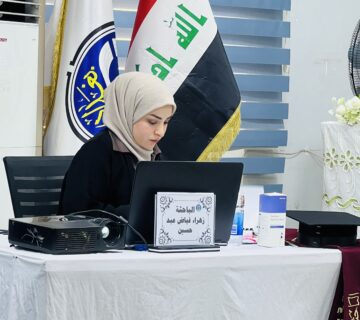

The College of Nursing at the University of Baghdad discussed a doctoral dissertation titled “The Effect of Cold Gel Packs and Deep Breathing Exercises on Pain and Anxiety During Drainage Tube Removal in Post-Bariatric Surgery Patients” by researcher Ali Malik Triak, under the supervision of Prof. Dr. Sadiq Abdul-Hussein Hassan, in the college’s main auditorium.
The thesis primarily aimed to determine the effect of cold gel packs and deep breathing exercises—both individually and in combination—on pain and anxiety levels during drainage tube removal in patients who had undergone bariatric surgery, as well as to examine the extent to which the effectiveness of these interventions was influenced by the patients’ sociodemographic characteristics.
The study results showed a marked reduction and statistically significant differences in pain and anxiety levels among the groups that used breathing exercises, cold gel packs, or a combination of both, compared to the control group, demonstrating the effectiveness of these nonpharmacological interventions in alleviating the distress of surgical procedures and improving patients’ psychological well-being postoperatively.
The study recommended the routine adoption of cold gel packs and deep breathing exercises as part of standard nursing interventions during the removal of drainage tubes for bariatric surgery patients to reduce psychological distress and pain, while emphasizing the importance of healthcare facilities establishing evidence-based nursing practices and encouraging nurses to conduct a comprehensive assessment of pain, anxiety, and vital signs prior to the procedure to tailor care according to each patient’s clinical condition. Following an extensive academic discussion, the researcher’s efforts were rewarded with a “very good” grade.
This discussion demonstrates academic institutions’ commitment to achieving the Sustainable Development Goals, particularly Goal 3 on good health and well-being, as the application of evidence-based nursing care and the reduction of patients’ physical and psychological suffering contribute to improving the quality of health services and enhancing community safety.