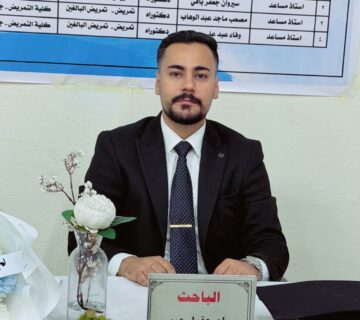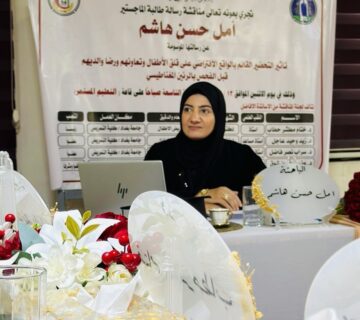
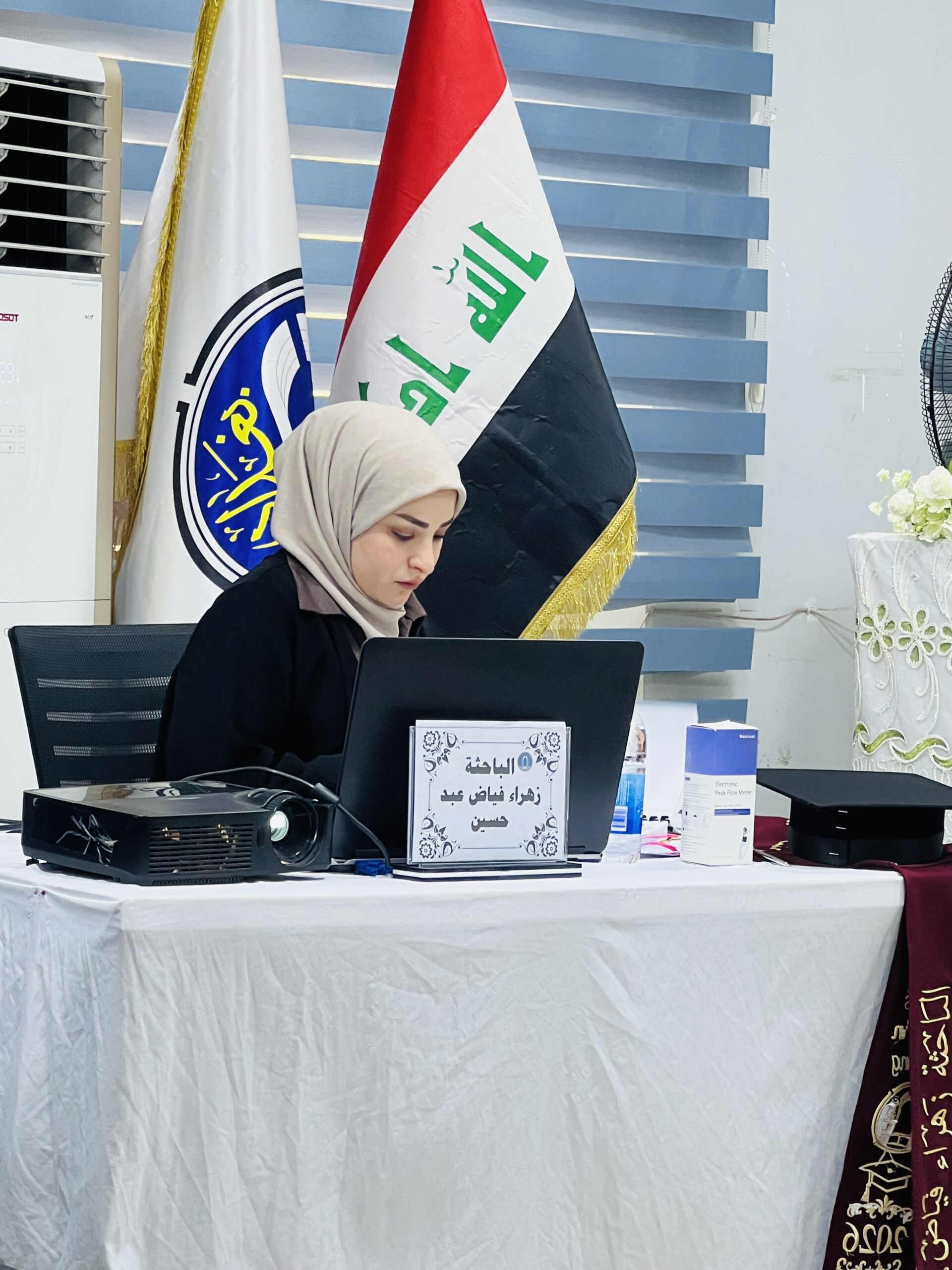
The College of Nursing examined the master’s thesis titled: “Efficacy of Respiratory Muscle Training on Dyspnea and Fatigue in Critically Ill Burn Patients Undergoing High-Flow Nasal Oxygen Therapy: A Randomized Controlled Trial,” submitted by the graduate student Zahraa Fayyad Abd, under the supervision of Assistant Professor Dr. Alaa Jawad Kadhim, held in the Continuing Education Hall of the college.
The study aimed primarily to evaluate the effectiveness of inspiratory muscle training in alleviating dyspnea and clinical fatigue among critically ill burn patients receiving high-flow nasal cannula (HFNC) oxygen therapy. It also sought to identify the relationship between the efficacy of respiratory muscle training and key demographic and clinical variables.
The findings proved that inspiratory muscle training was highly effective as a non-pharmacological nursing intervention, resulting in significant clinical improvements in mitigating dyspnea, relieving systemic fatigue, and accelerating respiratory stabilization in severely burned patients managed in intensive care settings.
The researcher recommended incorporating respiratory muscle training protocols into routine nursing care practices across burn centers and intensive care units, alongside providing specialized training for healthcare personnel on implementing respiratory rehabilitation techniques in conjunction with high-flow oxygen modalities to improve patient outcomes and prevent severe pulmonary complications.
Following an in-depth scientific defense, the thesis was approved, and the researcher was awarded a Master’s degree with an Excellence rating.
This study aligns directly with the Sustainable Development Goals, notably Goal 3 (Good Health and Well-being) by advancing critical care nursing for burn patients and reducing morbidity associated with acute respiratory complications, Goal 4 (Quality Education) through enriching clinical nursing scholarship with rigorous evidence-based trials, and Goal 12 (Responsible Consumption and Production) by optimizing medical oxygen utilization and reducing extended stays in burn intensive care units.