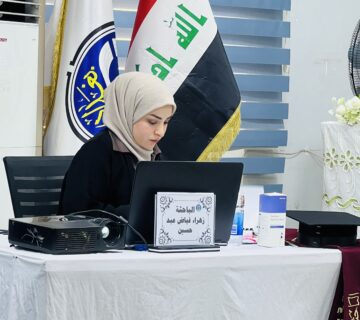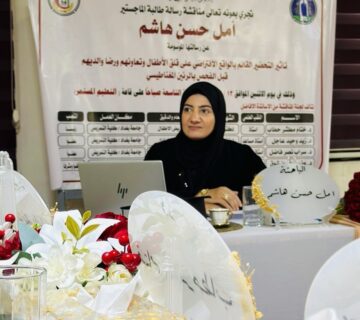

The College of Nursing at the University of Baghdad hosted the defense of a Master’s thesis in the Skills Lab by researcher Maryam Falih Hassan, titled (The Relationship Between Maladaptive Daydreaming, Depression, Anxiety, and Stress Among Healthcare Professionals: A Predictive Correlational Study), supervised by Prof. Dr. Sadiq Abdul-Hussein Al-Fayyadh.
The study primarily aimed to estimate the prevalence rates of maladaptive daydreaming, depression, anxiety, and stress symptoms among healthcare workers (nurses, physicians, dentists, pharmacists, and midwives), as well as to determine the predictive capacity and correlational dynamics linking maladaptive daydreaming to these affective and emotional disorders across the study cohort.
The findings revealed a moderate prevalence of maladaptive daydreaming, contrasted with a widespread and notable prevalence of depression, anxiety, and stress across diverse categories of healthcare professionals. These results highlight maladaptive cognitive absorption as a clinical risk factor and a significant predictive indicator associated with heightened psychological distress and diminished professional adaptation within clinical environments.
Based on the research outcomes, the study emphasized the necessity of addressing maladaptive daydreaming as a critical psychological phenomenon carrying pathological outcomes that heighten vulnerability to mood and anxiety disorders. It further recommended integrating psychological assessments for daydreaming into periodic occupational health screenings for healthcare personnel, alongside delivering tailored counseling and psychological support programs to safeguard mental well-being and foster occupational resilience during clinical practice.
Following a rigorous scientific discussion, the thesis was awarded an “Excellence” (Distinction) grade.
The outcomes of this research align closely with the Sustainable Development Goals (SDGs) advanced by the College of Nursing at the University of Baghdad—particularly Goal 3 (Good Health and Well-being) and Goal 8 (Decent Work and Economic Growth)—by prioritizing the mental wellness of medical and nursing staff and mitigating burnout to cultivate safe, healthy work environments that sustain superior patient care.