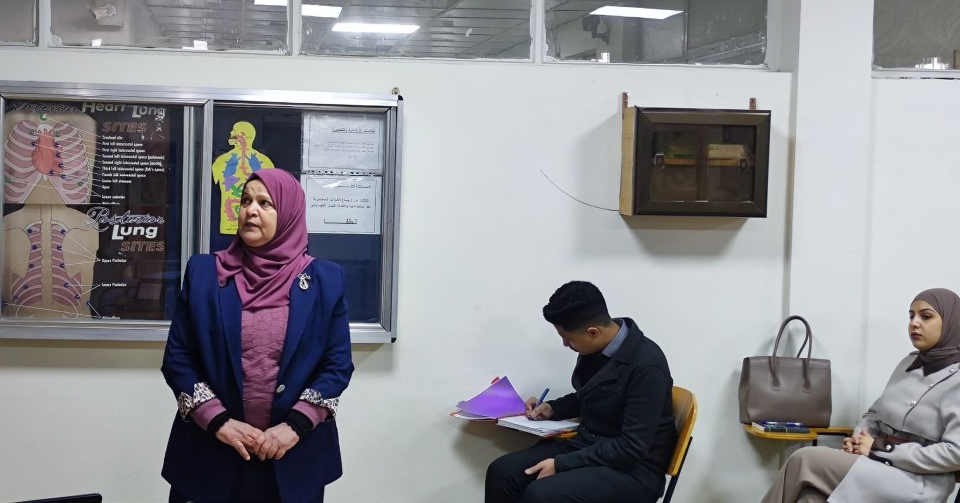
The Continuing Education Unit at the Faculty of Nursing, University of Baghdad, organized a specialized scientific workshop entitled “Ideological Extremism and its Role in the Growth of Terrorism,” presented by Professor Hakima Shaker Hassan and attended by master’s students in the Adult Nursing Laboratory at the faculty.
The workshop aimed to provide a comprehensive definition of the concept of ideological extremism and analyze the dangerous role it plays in fueling and increasing terrorist phenomena, while reviewing the psychological, social, and environmental factors that contribute to the spread of extremist ideology and how to develop effective strategies to combat these scourges and protect society from their devastating effects.
The workshop concluded with a set of fundamental recommendations calling for the promotion of intellectual security and the protection of individuals’ minds from destructive ideas through awareness-raising and systematic education, with the need to counter extremist ideologies by correcting misconceptions and refuting radical ideas with scientific and logical evidence. The workshop also emphasized the importance of activating the roles between families, educational institutions, religious institutions, and the media to instill values of moderation and provide intellectual immunity for young people, in addition to the importance of developing deterrent legislation and laws to combat intellectual terrorism in all its forms and manifestations.
This workshop is part of the activities of the Continuing Education Unit in collaboration with the Nursing Fundamentals Branch to promote cultural awareness and intellectual immunity among graduate students, thereby contributing to the achievement of the Sustainable Development Goals, particularly Goal 10 on reducing inequalities and Goal 16 on peace, justice, and strong institutions, as combating extremism ensures the creation of a safe and stable social environment based on acceptance of others and rejection of hatred, which reduces social gaps, protects vulnerable groups from intellectual exploitation, and ultimately leads to the building of cohesive societies that support the process of sustainable construction and prosperity.


