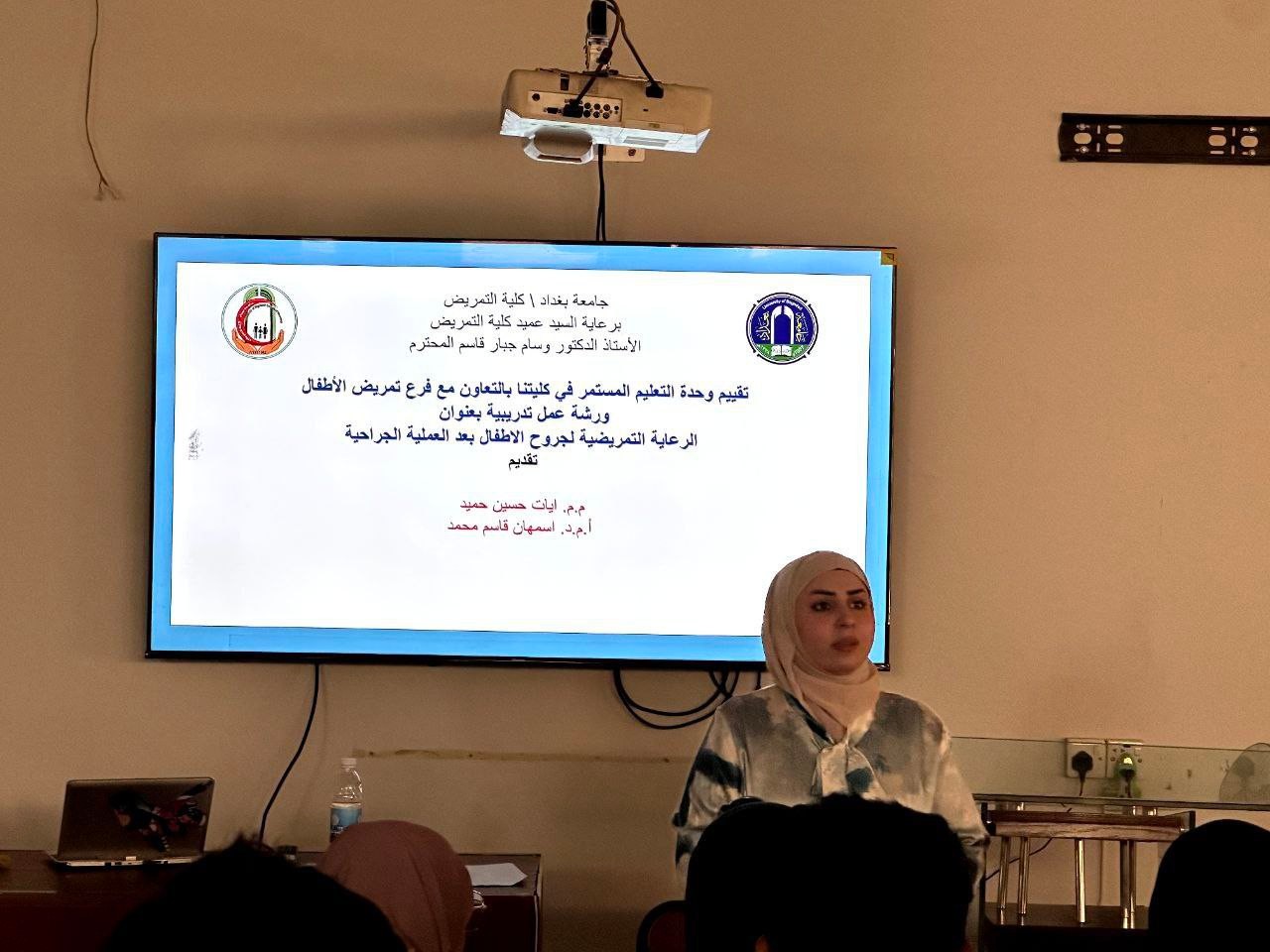
The Continuing Education Unit at the Faculty of Nursing, University of Baghdad, organized a specialized workshop entitled “Nursing Care for Children’s Wounds after Surgery,” presented by Assistant Professor Dr. Asmahan Qasim Muhammad and Assistant Lecturer Ayat Hussein Hamid, in the presence of a group of undergraduate students. The workshop focused on providing students with the clinical skills necessary to deal with children’s wounds and ensure their healing with high efficiency.
The workshop included comprehensive scientific topics, beginning with introducing students to the different types and classifications of wounds according to their cleanliness, whether they are intentional or unintentional, clean or festering, with training on wound assessment mechanisms by measuring their dimensions, examining their edges, and noting the presence or absence of abscesses or odors, as well as introducing them to the tools necessary for wound care, such as dressing kits, surgical gloves, and sterilizing fluids, and how to change dressings and sterilize wounds, paying attention to the vital signs that must be assessed before re-dressing.
The workshop concluded with a set of recommendations that emphasized the importance of practical training for students using laboratory mannequins at the college to consolidate manual skills, while stressing the need to keep up with global research in this field to enhance the ability to differentiate between different types of wounds and deal with them professionally. The workshop was considered a qualitative shift that moves students from theoretical academic framework to the practical applied framework, which is reflected in their daily professional behavior and the development of their leadership personalities capable of inspiring and bringing about positive change in the health community.
This activity is part of the continuing education unit’s curriculum to achieve the Sustainable Development Goals, specifically Goal 4 (Quality Education) by providing educational content that integrates scientific knowledge and field application, and Goal 3 (Good Health and Well-being) by improving the quality of nursing care provided to children and ensuring their safety after surgery.


