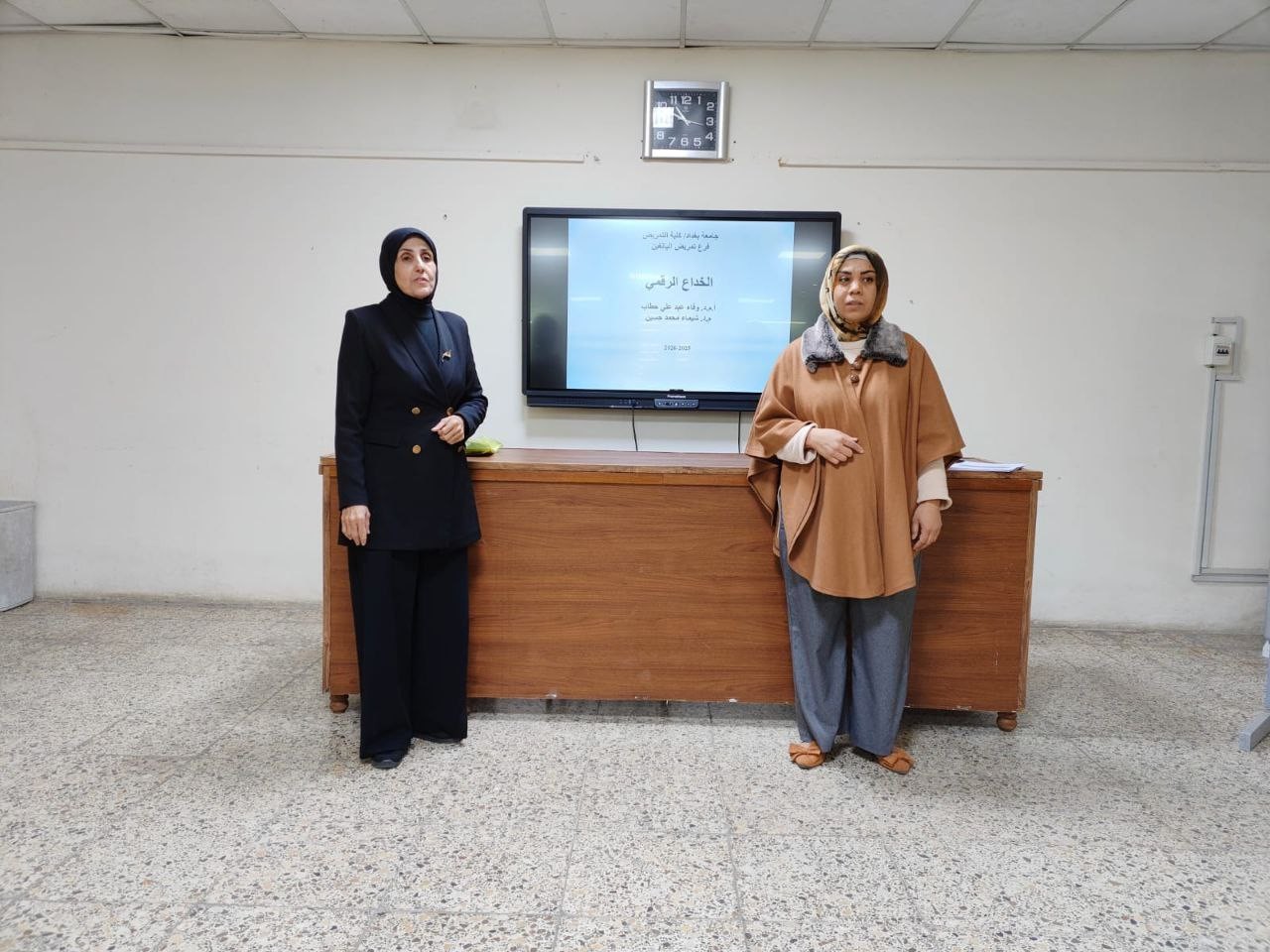
The Continuing Education Unit, in collaboration with the Adult Nursing Branch at the Faculty of Nursing, University of Baghdad, organized a specialized workshop entitled “Digital Fraud.” The workshop was presented by Assistant Professor Dr. Wafa Abdul Ali Hatab and Lecturer Dr. Shaima Muhammad Hussein to highlight the growing cyber risks in the contemporary digital environment. It aimed to enhance the security and technical awareness of fourth-year students.
The workshop focused on scientific and technical topics related to digital deception, which is defined as fraudulent online practices aimed at stealing personal and banking data and money. It reviewed common methods of fraud, such as fake links, fake prizes, and identity theft, and introduced phishing and social engineering mechanisms used aim to steal passwords and forge websites, exposing fraudulent patterns of untrustworthy stores and misleading messages, and guiding participants on how to protect their data by enabling two-factor authentication and avoiding clicking on suspicious links.
The workshop concluded with a series of security recommendations that emphasized the need to verify sources before opening attachments and confirming that banking institutions do not request verification codes over the phone, as well as the importance of reporting any attempted fraud to the relevant authorities immediately. This will enable attendees to use technology safely and avoid falling victim to sophisticated digital attacks, thereby ensuring the protection of the digital privacy of both nursing staff and students.
This workshop was organized in response to the requirements of the Sustainable Development Goals, particularly Goal 4 (Quality Education) by providing students with 21st century skills, and Goal 9 (Industry, Innovation and Infrastructure) by enhancing cybersecurity and protecting personal and institutional information infrastructure, thereby contributing to building a secure and technologically fortified knowledge society.


