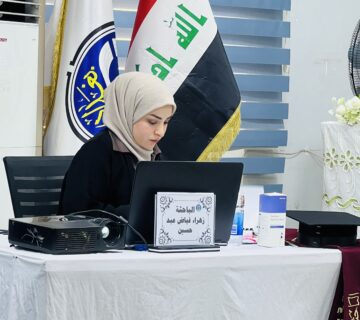
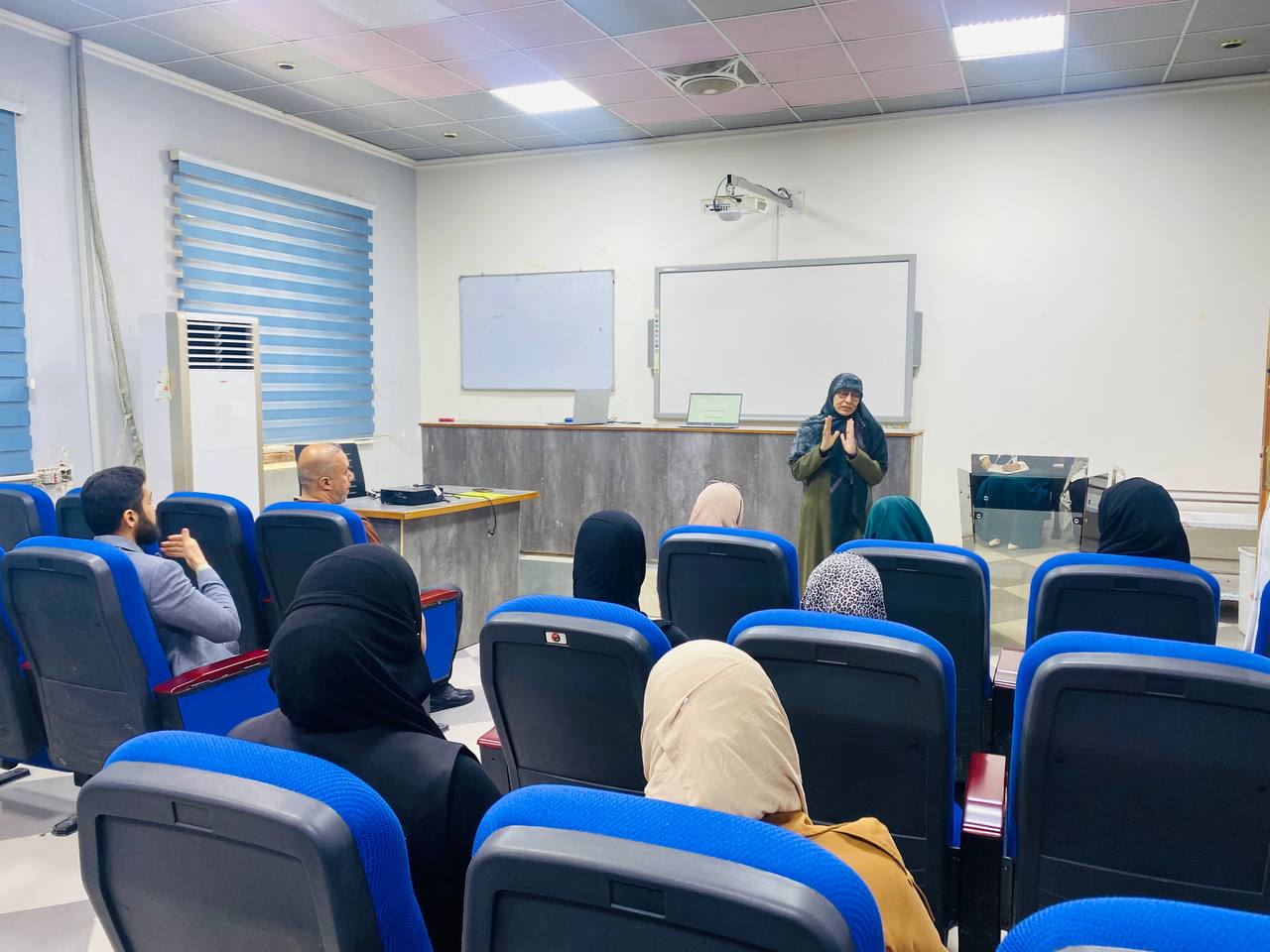
The Continuing Education Unit at the college of Nursing, University of Baghdad, organized a scientific workshop entitled “Scleroderma,” presented by Assistant Professor Dr. Alaa Hassan Marza and Assistant Professor Dr. Ibtisam Khalaf Abdul Ali, in the presence of a group of faculty members and administrators in the Continuing Education Hall at the faculty.
The workshop aimed to shed light on the nature of the disease, its clinical symptoms, and its environmental and genetic causes to promote health awareness among academic and professional staff. The workshop included multiple scientific topics that provided a comprehensive overview of the disease, its various classifications, and the pathological significance of each type, as well as addressing the epidemiology of the disease and its incidence rates, explaining the “pathology” and progression of the disease within the body, with a focus on prominent clinical signs, modern diagnostic methods, and the importance of early detection in the success of treatment plans.
During the workshop, researchers called for the need to avoid environmental triggers and stimuli that contribute to the onset of the disease, especially in people with a genetic predisposition, most notably smoking and industrial fumes from the plastics industry, in addition to avoiding chemical injuries. The recommendations also emphasized the importance of improving quality of life to manage the disease through the use of high-quality, natural skin moisturizers of high quality and natural origin, and regular exercise to improve flexibility and blood circulation, with an emphasis on healthy nutrition to reduce inflammation and full compliance with medical supervision and prescribed treatments.
This workshop achieves the Sustainable Development Goals, specifically Goal 3 (Good Health and Well-being) by spreading awareness of chronic diseases and ways to prevent them and improve the quality of life of individuals, and Goal 4 (Quality Education) by providing specialized knowledge platforms that contribute to the development of academic staff skills and the transfer of modern medical knowledge to serve society.