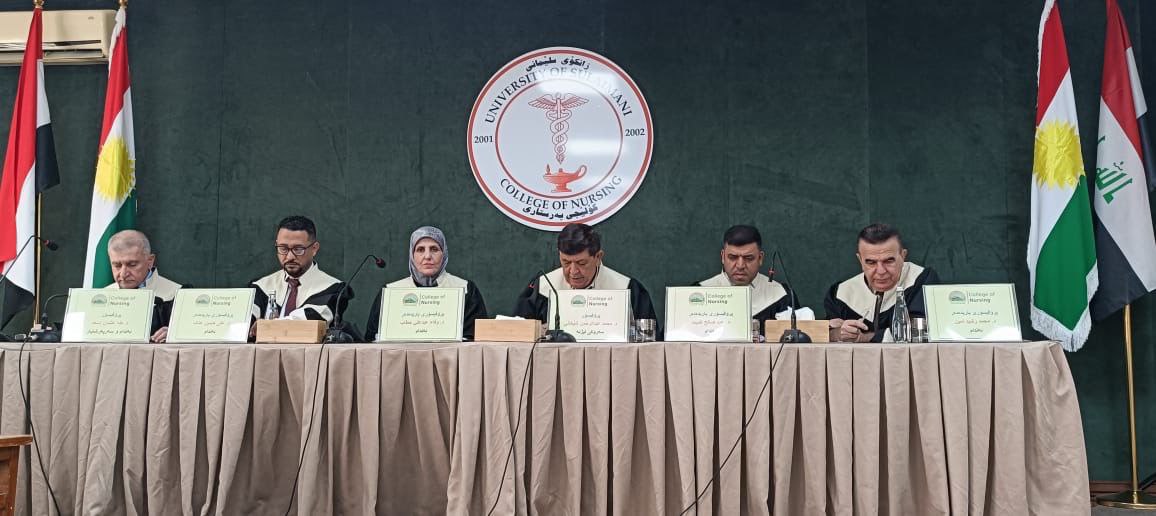
Professors Wafa Abdul Ali Hatab and Ali Hussein Alak, lecturers at the College of Nursing at the University of Baghdad, participated in the discussion of a doctoral thesis entitled “The Effectiveness of the Educational Program on Metabolic Standards for Patients with Coronary Heart Disease in Specialized Cardiac Hospitals in the City of Sulaymaniyah.”
The study aimed to determine the incidence of metabolic syndrome and evaluate the effectiveness of the educational program on metabolic, physical, and psychological parameters, including: weight gain, blood sugar levels, blood pressure, blood lipid levels, improved sleep quality, adherence to treatment, and stress levels in patients with heart disease in Sulaymaniyah, Kurdistan Region, Iraq.
The results of the study showed that patients who received the educational program had moderate to significant improvements in their metabolic processes six months after the program was implemented. In contrast, patients in the group that did not receive the program showed weak to moderate levels of metabolic processes. These results indicate the importance of educational interventions in achieving the third Sustainable Development Goal (good health and well-being) by improving the chronic health of individuals.
The study recommended conducting educational programs related to metabolic processes on a larger number of participants to obtain more accurate results, and using this study as a reference for future tests and studies. The study also recommended that cardiac hospitals in the Kurdistan Region and all hospitals in Iraq implement this educational program for patients with coronary heart disease. The implementation of these programs would reduce the rates of multiple infections.