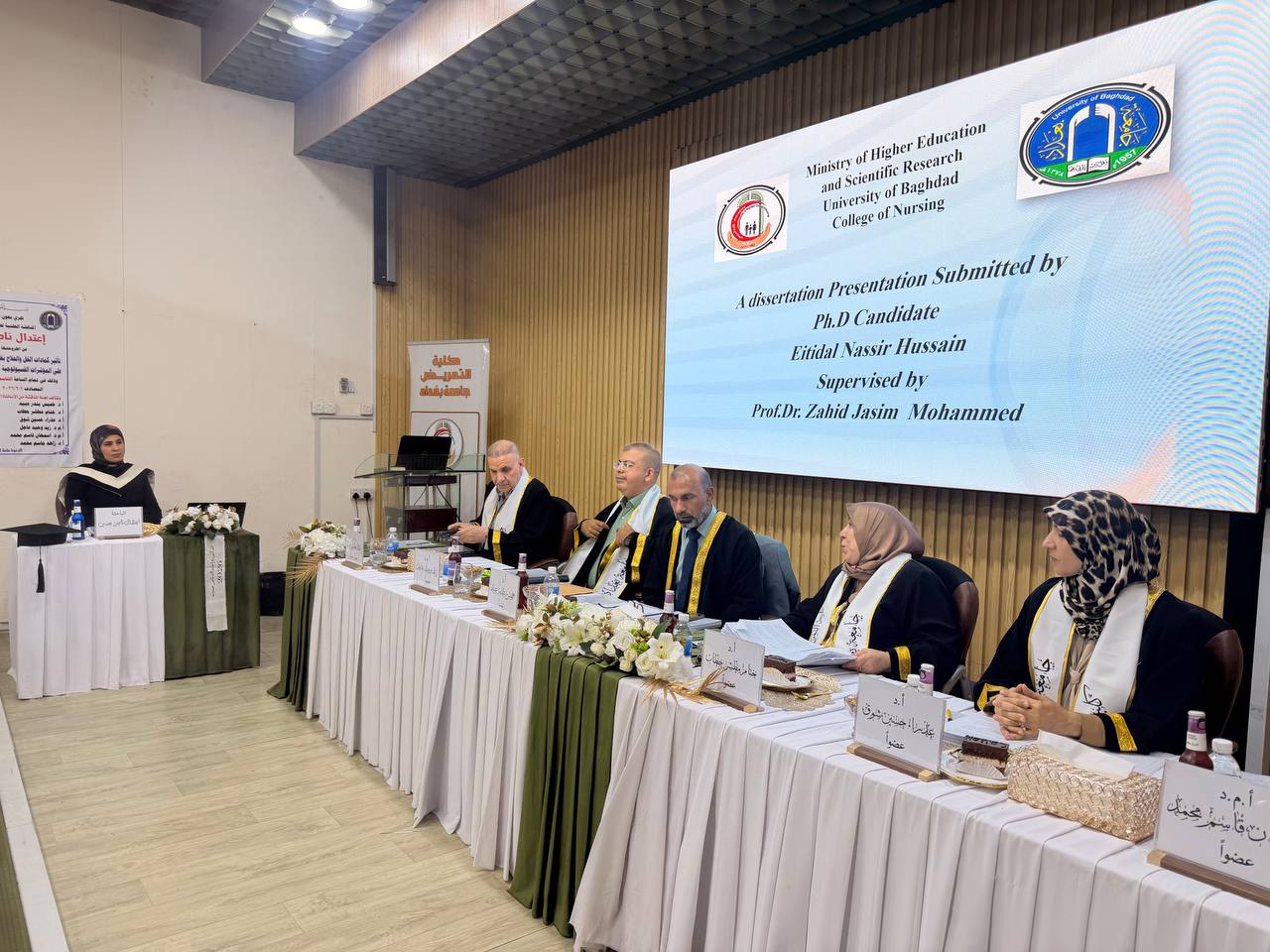
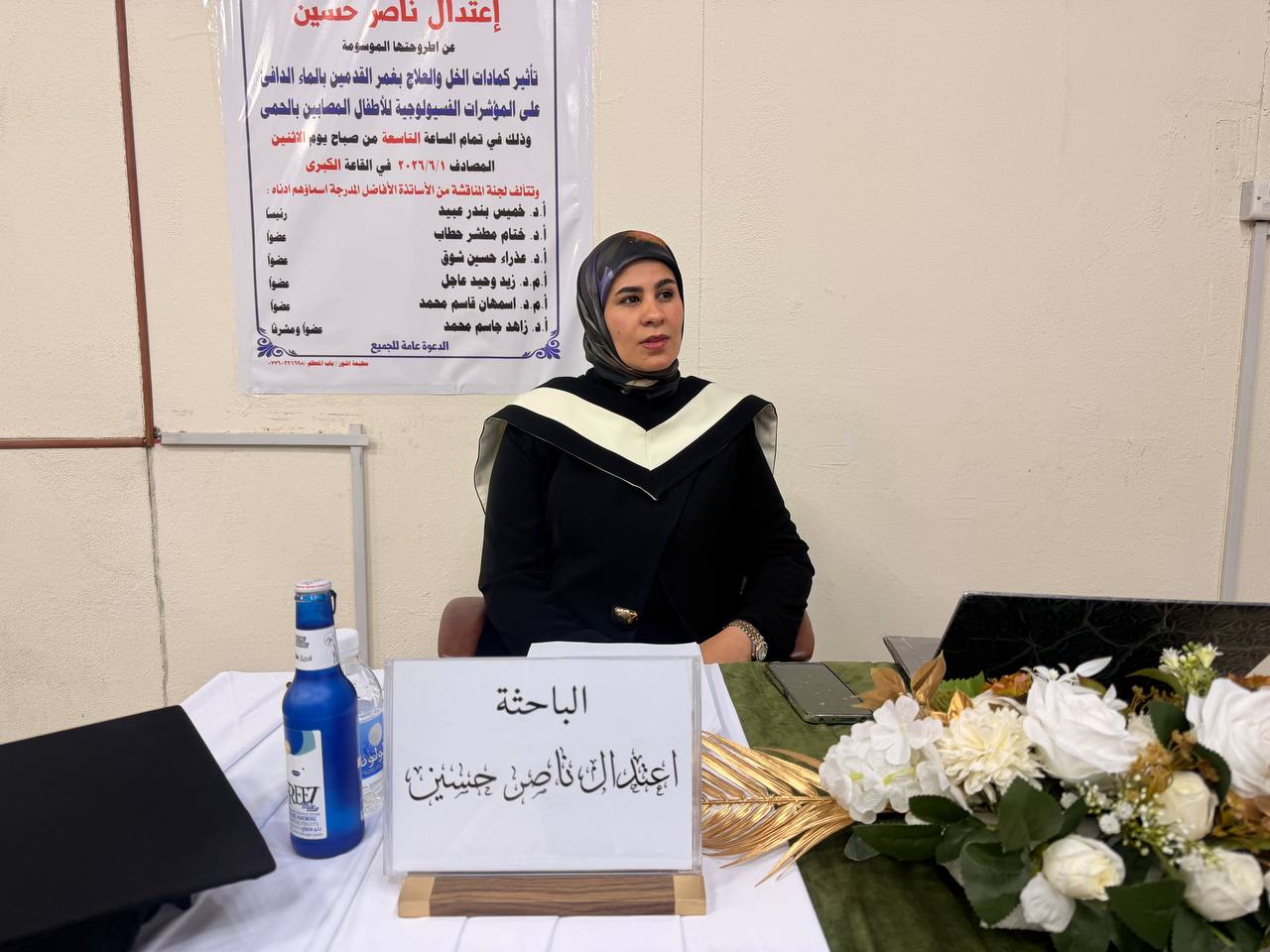
The College of Nursing at the University of Baghdad discussed a doctoral dissertation titled “The Effect of Vinegar Compresses and Warm Footbath Therapy on the Physiological Indicators of Febrile Children,” presented by the researcher Iftidal Nasir Hussein, under the supervision of Professor Dr. Zahid Jasim Mohammed, in the college’s Grand Hall.
The study primarily aimed to determine the effect of vinegar compresses on selected physiological indicators in febrile children, alongside assessing the impact of warm footbath therapy on those same physiological parameters, while conducting a rigorous scientific comparison between the two modalities to identify the more effective approach for managing the clinical status of young patients.
The dissertation yielded several significant clinical conclusions, as the findings demonstrated that vinegar compresses were more effective in controlling and reducing core body temperature compared to warm footbath therapy, whereas warm footbath therapy proved more effective than vinegar compresses in improving blood oxygen saturation levels ($SpO_2$) in febrile children. Regarding heart rate ($HR$) and respiratory rate ($RR$), the results indicated no statistically significant differences between the two modalities, as both interventions demonstrated comparable efficacy in stabilizing pulse and breathing rates.
Based on these findings, the study offered recommendations advocating for the integration of vinegar compresses and warm footbaths as supportive interventions alongside routine care to manage pediatric fever, while emphasizing the necessity of training healthcare providers—particularly nurses—on how to effectively implement these non-pharmacological methods, in addition to raising awareness among parents and caregivers regarding the home application of these safe, accessible, and comfortable interventions, which entail no financial burden or adverse side effects.
Furthermore, the outcomes of this study align directly with the United Nations Sustainable Development Goals (SDGs) pursued by the College of Nursing at the University of Baghdad, as they support Goal 3 (Good Health and Well-being) by providing safe nursing solutions that reduce overreliance on chemical pharmaceuticals, and contribute to Goal 12 (Responsible Consumption and Production) by offering cost-effective, accessible home-based therapeutic alternatives that alleviate the financial burden on both families and healthcare institutions while ensuring the sustainability of medical resources, with the defense concluding with the researcher being awarded the grade of “Excellence” in recognition of her outstanding scholarly effort.