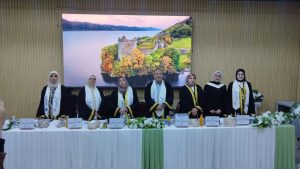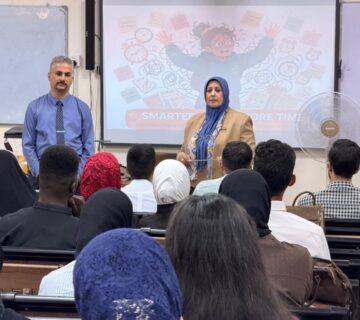
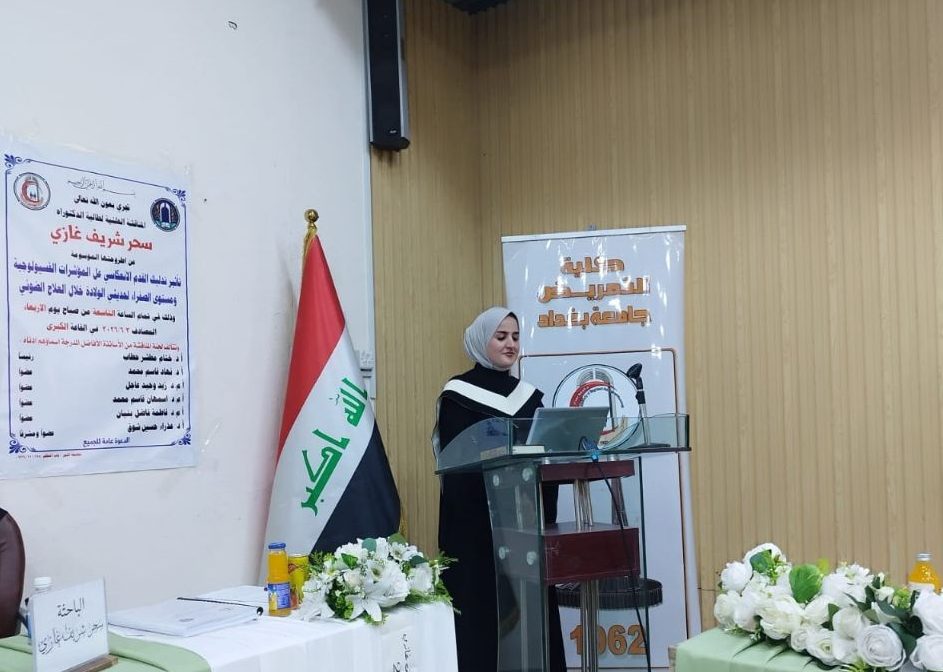
The College of Nursing at the University of Baghdad discussed a doctoral dissertation titled “The Effect of Reflexology Foot Massage on Physiological Indicators and Bilirubin Levels in Newborns During Phototherapy” by student (Sahar Sharif Ghazi), under the supervision of Professor Dr. (Azra Hussein Shawq), in the college’s main auditorium.
The thesis aimed to assess bilirubin levels and physiological parameters in preterm infants undergoing phototherapy, evaluate the effect of reflexology foot massage on bilirubin levels and the stability of their physiological parameters, and explore the relationship between the effectiveness of this technique and the social and demographic characteristics of preterm infants.
The thesis findings concluded that reflexology, as a complementary therapy alongside standard care, is highly effective in stabilizing physiological parameters and reducing bilirubin levels in premature infants, as bilirubin concentrations decreased more significantly when phototherapy was combined with reflexology, while the results showed no association between the effect of this massage and the social and demographic variables of preterm infants. The researcher received a grade of “Excellent” for her thesis.
The study recommended the establishment of training courses for nurses in neonatal intensive care units (NICUs) on the reflexology foot massage technique for inclusion in daily nursing care, as it is a safe, cost-effective procedure that is well-tolerated by preterm infants with physiological jaundice. It also recommended using this technique as a complementary approach to support standard care, particularly for preterm infants experiencing respiratory difficulties and low oxygen saturation, while calling for further studies to explore the combined effects of these non-pharmacological techniques with other types of massage and kangaroo mother care (KMC).
This scientific achievement aligns with the College’s steadfast commitment to achieving the United Nations Sustainable Development Goals, particularly Goal 3 on “Good Health and Well-being,” by developing nursing and clinical care approaches tailored to newborns and preterm infants, and by providing safe, complementary therapeutic solutions that help reduce patient morbidity and improve the quality of healthcare provided to the most vulnerable segments of society.