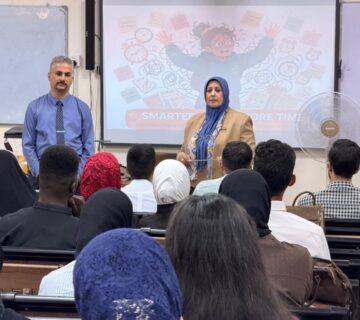
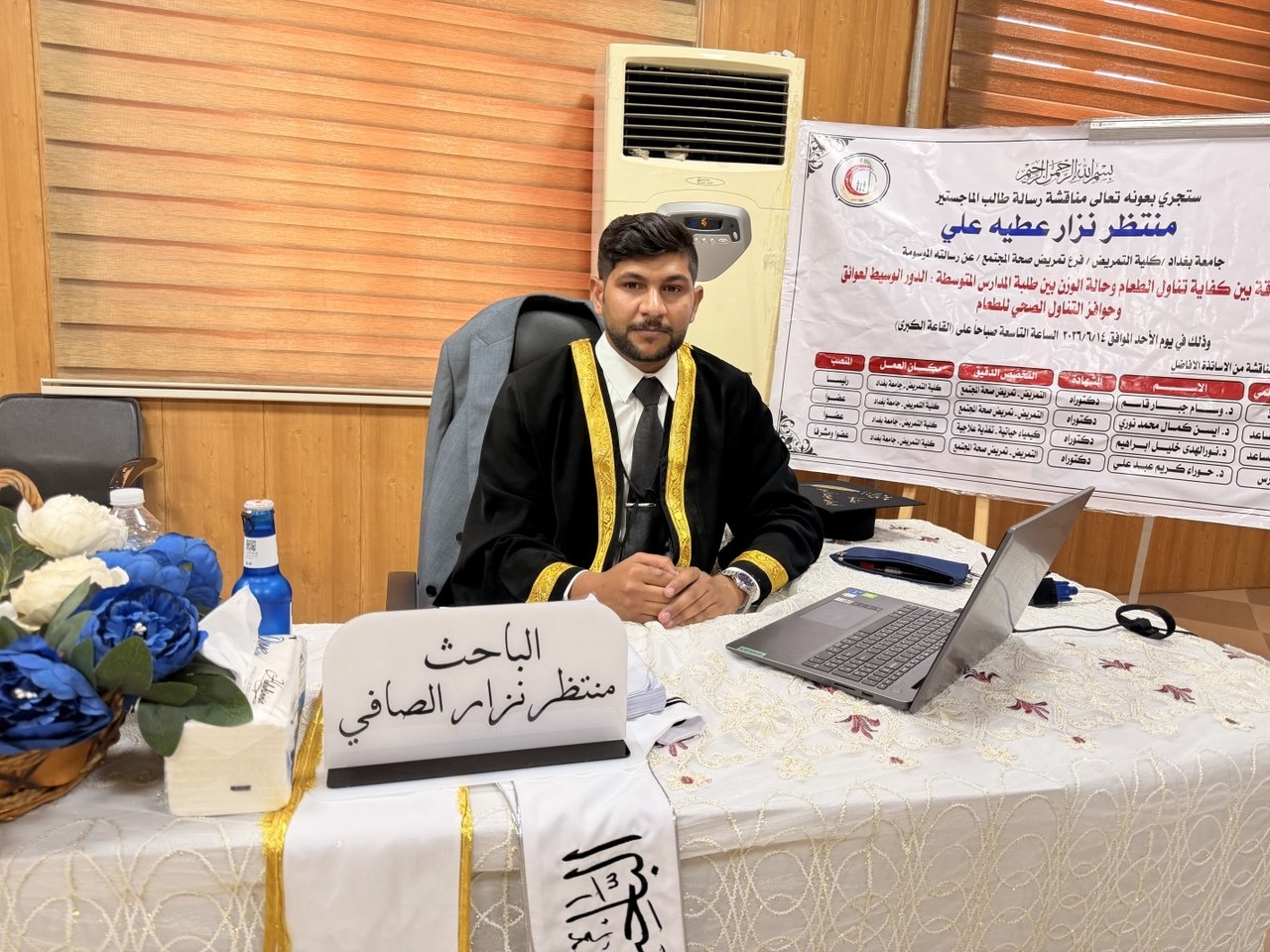
The College of Nursing at the University of Baghdad hosted a defense of the master’s thesis titled “The Relationship Between Eating Efficiency and Weight Status Among Middle School Students: The Mediating Role of Barriers and Incentives to Healthy Eating” by student Muntazar Nizar Attia Ali, under the supervision of Dr. Hawra Karim Abdul Ali. In the college’s main auditorium
The study aimed to investigate the relationship between dietary efficiency, barriers and motivators for healthy eating, age, and socioeconomic status with body mass index (BMI) among middle school students, as well as to determine the direct and indirect effects of dietary efficiency on BMI through the mediating role of both barriers and motivators for healthy eating, in addition to examining the effects of age and socioeconomic status, and analyzing differences in dietary competence and barriers to and motivators for healthy eating by gender, grade level, socioeconomic status groups, and BMI categories.
The results of the thesis concluded that dietary efficiency plays an important role in predicting body weight among middle school students, as higher dietary efficiency was associated with a lower body mass index; furthermore, both barriers and motivators act as mediating variables in this relationship, while age and socioeconomic status act as moderating variables for the relationship between dietary efficiency and body mass index. Furthermore, there are statistically significant differences in these variables that vary by gender, grade level, and socioeconomic status. The researcher was awarded a grade of “Excellent” for his outstanding academic work.
The study recommended strengthening collaboration between the Ministries of Education and Health by implementing school health programs and educational activities that promote healthy eating habits, and integrating the concepts of dietary competence and healthy nutrition into school curricula to foster awareness and healthy eating behaviors among adolescents, in addition to calling for future longitudinal studies to assess this impact over time and to include other determinants such as physical activity.
This research is consistent with the college’s firm commitment to supporting the United Nations Sustainable Development Goals, specifically Goal 3 on (Good Health and Well-being) and Goal 4 on (Quality Education), by producing rigorous scientific research that supports the health of young people and adolescents and works to combat obesity and eating disorders through integrated educational and awareness-raising initiatives.