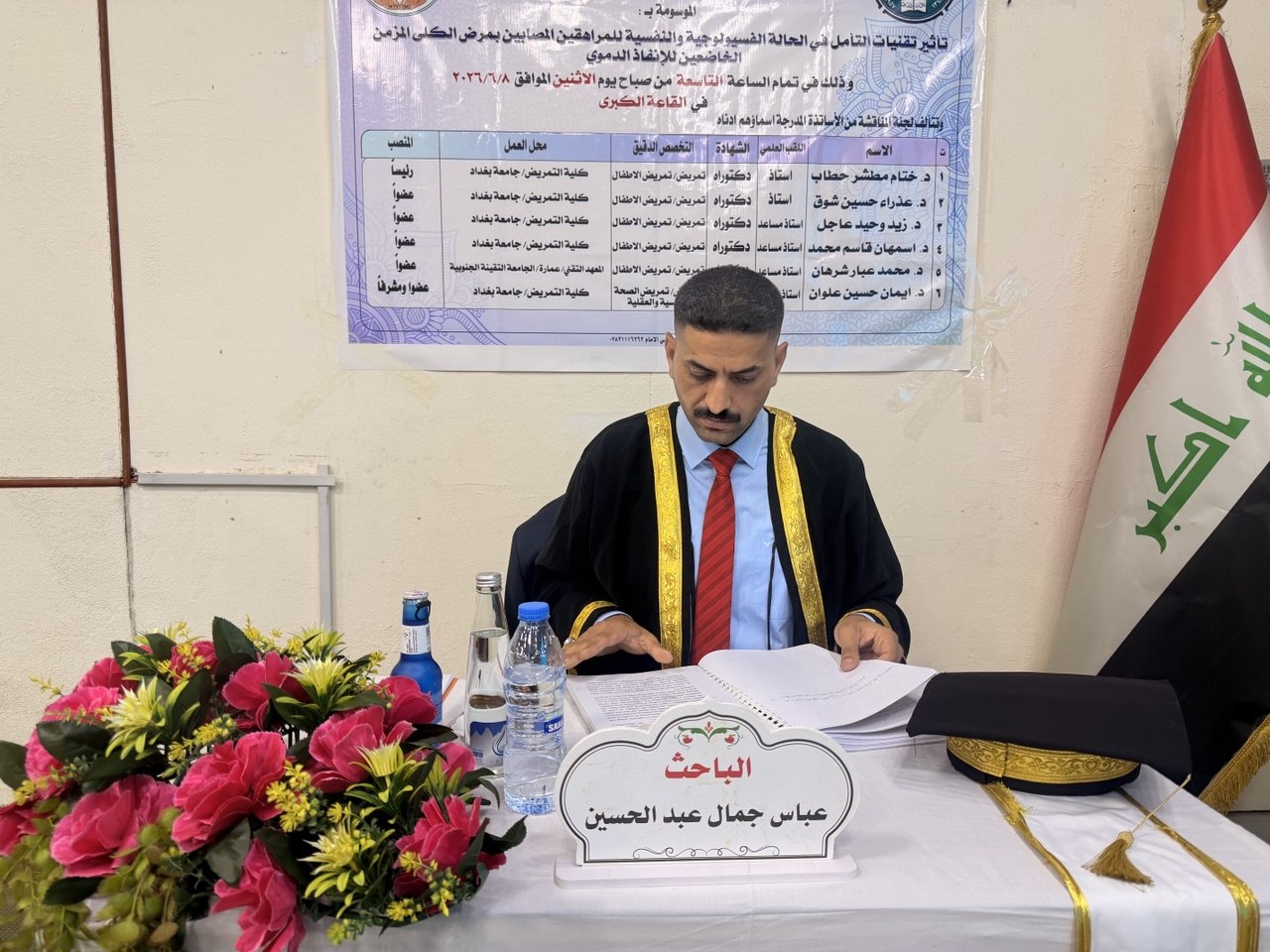
The College of Nursing at the University of Baghdad discussed the doctoral dissertation titled “The Effect of Meditation Techniques on the Physiological and Psychological Status of Adolescents with Chronic Kidney Disease Undergoing Hemodialysis,” by student Abbas Jamal Abdul Hussein Habib, under the supervision of Professor Dr. Iman Hussein Alwan, in the college’s main nursing auditorium.
The study primarily aimed to evaluate the impact of meditation practices on physiological status—including blood pressure, respiratory rate, heart rate, and body temperature), as well as psychological status—specifically levels of anxiety and depression—among adolescents with chronic kidney disease undergoing hemodialysis.
The study concluded that the therapeutic intervention using meditation techniques had a targeted positive effect on specific physiological indicators such as heart rate and respiratory rate, as well as the notable effectiveness of these practices in reducing symptoms of anxiety and depression, which contributed to improved psychological and physical well-being among the adolescents undergoing treatment.
The thesis put forward key recommendations emphasizing the need to integrate meditation and mindfulness techniques into standard nursing and clinical care protocols within hemodialysis units, and to adopt them as a safe, non-pharmacological complementary intervention to promote the holistic health of adolescents with chronic kidney disease. The researcher’s efforts were recognized with a “very good” grade.
In a related context, this study reflects academic institutions’ commitment to achieving the Sustainable Development Goals, particularly Goal 3 on good health and well-being, as the integration of complementary psychological and physical care contributes to improving the quality of health services provided to patients, and alleviating the burden of chronic diseases on critical age groups such as adolescents, thereby ensuring an integrated and sustainable health system.


