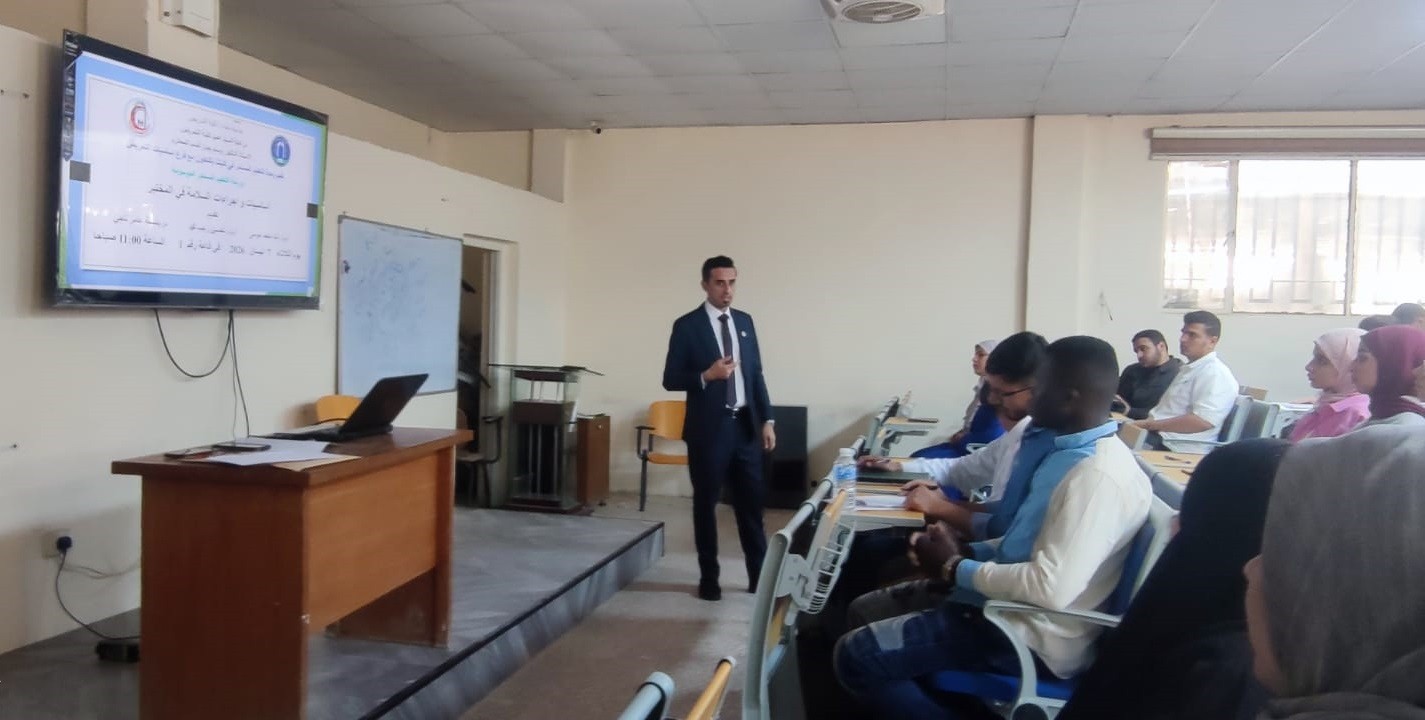
The Continuing Education Unit at the College of Nursing, University of Baghdad, organized a specialized workshop titled “Laboratory Safety Basics and Procedures,” presented by Assistant Professor Dr. Iyad Majid Musa, Assistant Professor Dr. Tahseen Rajab Muhammad, and Instructor Basma Amer Naji, faculty members in the Fundamentals of Nursing Department. The workshop took place in Lecture Hall No. 1 at the college and was attended by a group of professors and a large number of first-year students.
The workshop aimed to enhance the competence of first-year students by introducing them to laboratory safety rules that ensure a safe learning environment for both students and faculty, with a focus on raising awareness of potential hazards and how to avoid them through accurate identification of hazard sources within the laboratory. The practical component included training participants on proper techniques for handling laboratory tools and materials, the correct use of medical devices and personal protective equipment, as well as training on how to use fire extinguishers in emergencies and highlighting the importance of implementing comprehensive preventive plans to reduce accidents.
The workshop concluded with a series of key recommendations emphasizing that adherence to laboratory safety rules is an absolute necessity for everyone’s protection, not merely an optional add-on, stressing that increased awareness and continuous training are the most effective ways to reduce laboratory accidents, while emphasizing that science can only achieve its noble goals if practiced in a safe and responsible manner that ensures a healthy and stable scientific environment.
This workshop is part of a series of activities organized by the Continuing Education Unit aimed at achieving the Sustainable Development Goals, particularly Goal 4 on quality education through the provision of a safe learning environment, and Goal 3 on good health and well-being through the establishment of a culture of prevention and occupational safety in academic institutions.


