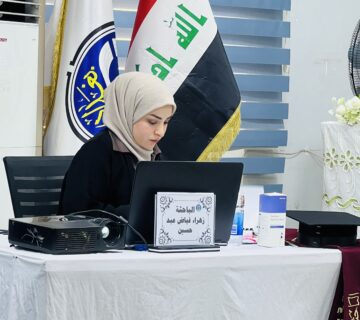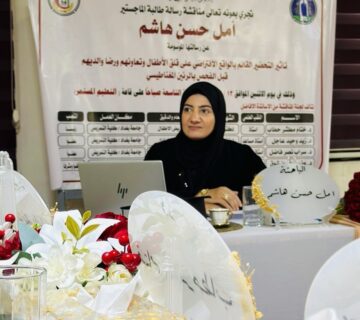

The Continuing Education Unit at the College of Nursing, University of Baghdad, organized a specialized workshop titled “Climate Change and Its Impact on Infectious Diseases.” The workshop was presented by Dr. Hawra Ali and attended by a group of undergraduate students who engaged with the scientific discussions regarding health and environmental security.
The workshop covered comprehensive scientific topics aimed at establishing the concept of climate change and analyzing its direct effects on public health, with a focus on the direct relationship between climate fluctuations and the increased spread of infectious diseases. It also identified the most prominent climate-related epidemics, such as malaria, cholera, and dengue fever, explaining the role of environmental factors—such as heat waves, humidity, and floods—in accelerating the transmission of infections, supported by real-world examples of outbreaks linked to these changes.
The workshop also devoted a vital section to clarifying the essential role of nurses in the system of prevention and control of climate-related diseases, and to training students to apply health education principles as a proactive tool to reduce epidemiological risks in the community.
At the conclusion of the deliberations, the workshop produced a set of strategic recommendations, foremost among which was a call to integrate climate change concepts into nursing school curricula and to strengthen community health awareness programs. The recommendations also emphasized the need to train nursing staff to respond rapidly to outbreaks and to support surveillance systems to ensure early detection of diseases and mitigate their effects.
It is worth noting that this workshop is part of a series of activities organized by the Continuing Education Unit aimed at developing the skills of students and staff. It also contributes effectively to achieving the Sustainable Development Goals, particularly Goal 4 (Quality Education), by providing scientific content that keeps pace with global developments and addresses health and environmental issues.