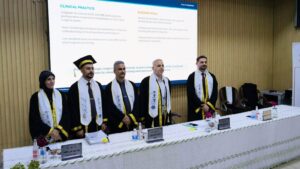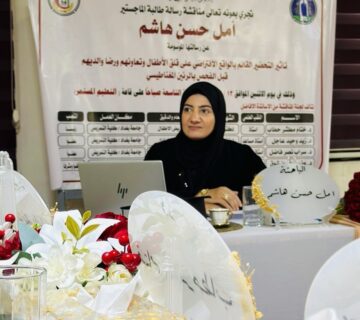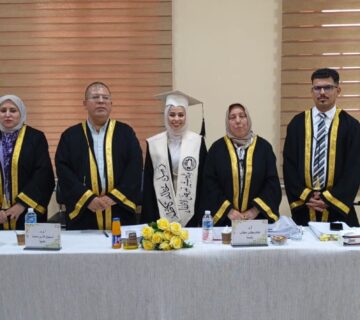
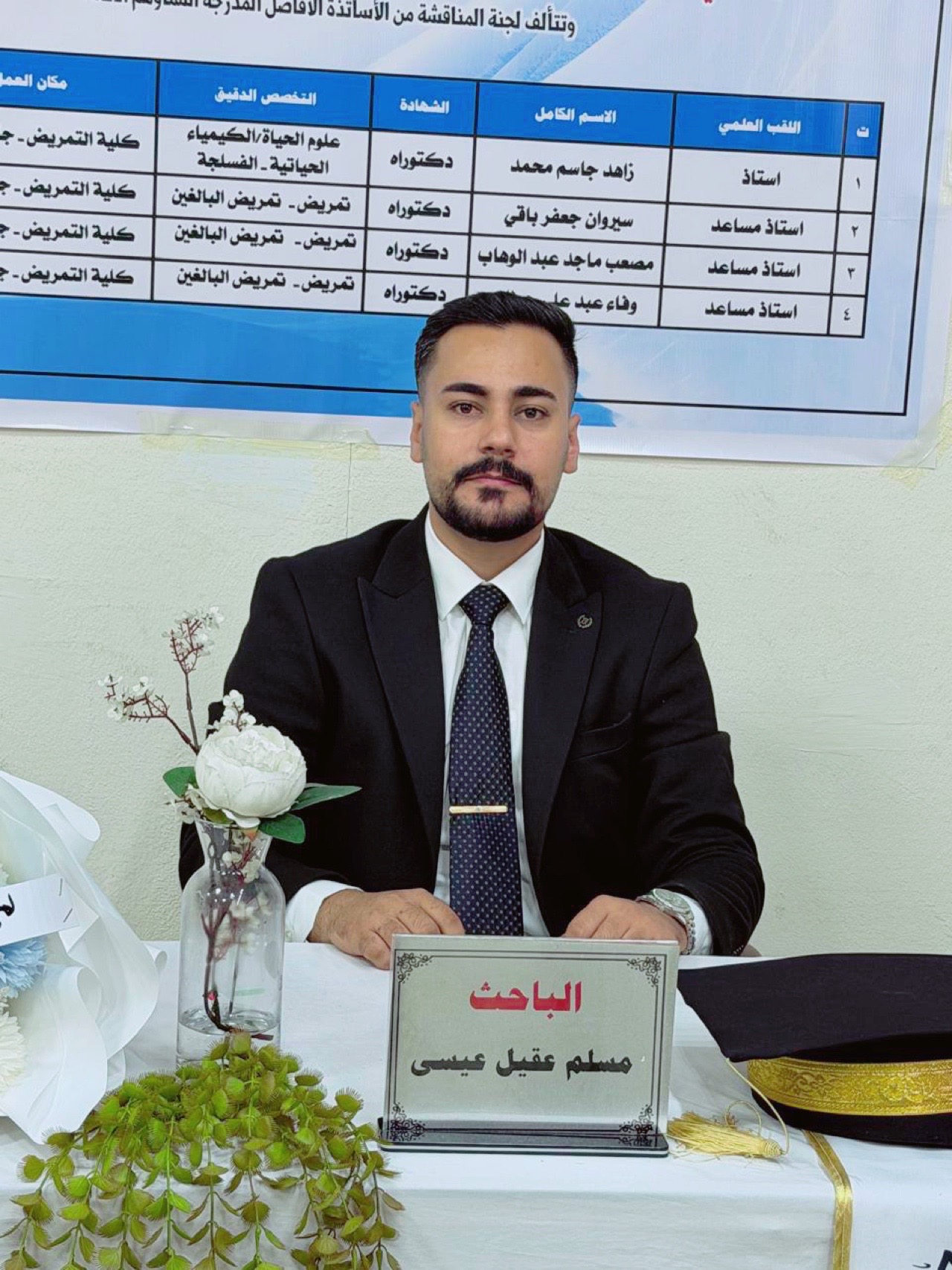
The College of Nursing examined the master’s thesis titled: “Effect of Different Breathing Techniques on Dyspnea and Cardiopulmonary Parameters in Patients After Open-Heart Surgery: A Randomized Controlled Trial,” submitted by the graduate student Muslim Aqeel Issa, under the supervision of Assistant Professor Dr. Wafaa Abd Ali Hattab, held in the Grand Hall of the college.
The study primarily aimed to evaluate and compare the effectiveness of the Active Cycle of Breathing Techniques (ACBT) versus segmental breathing exercises in mitigating dyspnea indices and improving cardiopulmonary parameters among patients undergoing open-heart surgery. It also sought to determine the correlation between dyspnea management, cardiopulmonary outcomes, and the sociodemographic characteristics of the study cohort.
The results demonstrated statistically significant differences in dyspnea reduction when comparing both the ACBT and segmental breathing exercise groups to the control group. Furthermore, ACBT proved to be statistically superior to segmental breathing exercises in alleviating dyspnea. Conversely, no statistically significant differences were observed between ACBT and segmental breathing exercises regarding other cardiopulmonary parameters, demonstrating the clinical viability of both modalities as safe, non-pharmacological rehabilitative nursing interventions.
Based on the research findings, the study recommended that the Iraqi Ministry of Health integrate the Active Cycle of Breathing Techniques and segmental breathing regimens into routine rehabilitative care protocols within specialized cardiac centers to optimize cardiopulmonary functions, relieve dyspnea, and prevent post-surgical pulmonary complications. Following an in-depth scientific defense, the thesis was approved, and the researcher was awarded a Master’s degree with an Excellence rating.
This study aligns directly with the Sustainable Development Goals, notably Goal 3 (Good Health and Well-being) by advancing post-operative cardiac nursing care and accelerating patient recovery, Goal 4 (Quality Education) through enriching evidence-based nursing scholarship with rigorous clinical trials, and Goal 12 (Responsible Consumption and Production) by optimizing healthcare resource utilization and reducing hospital stays.