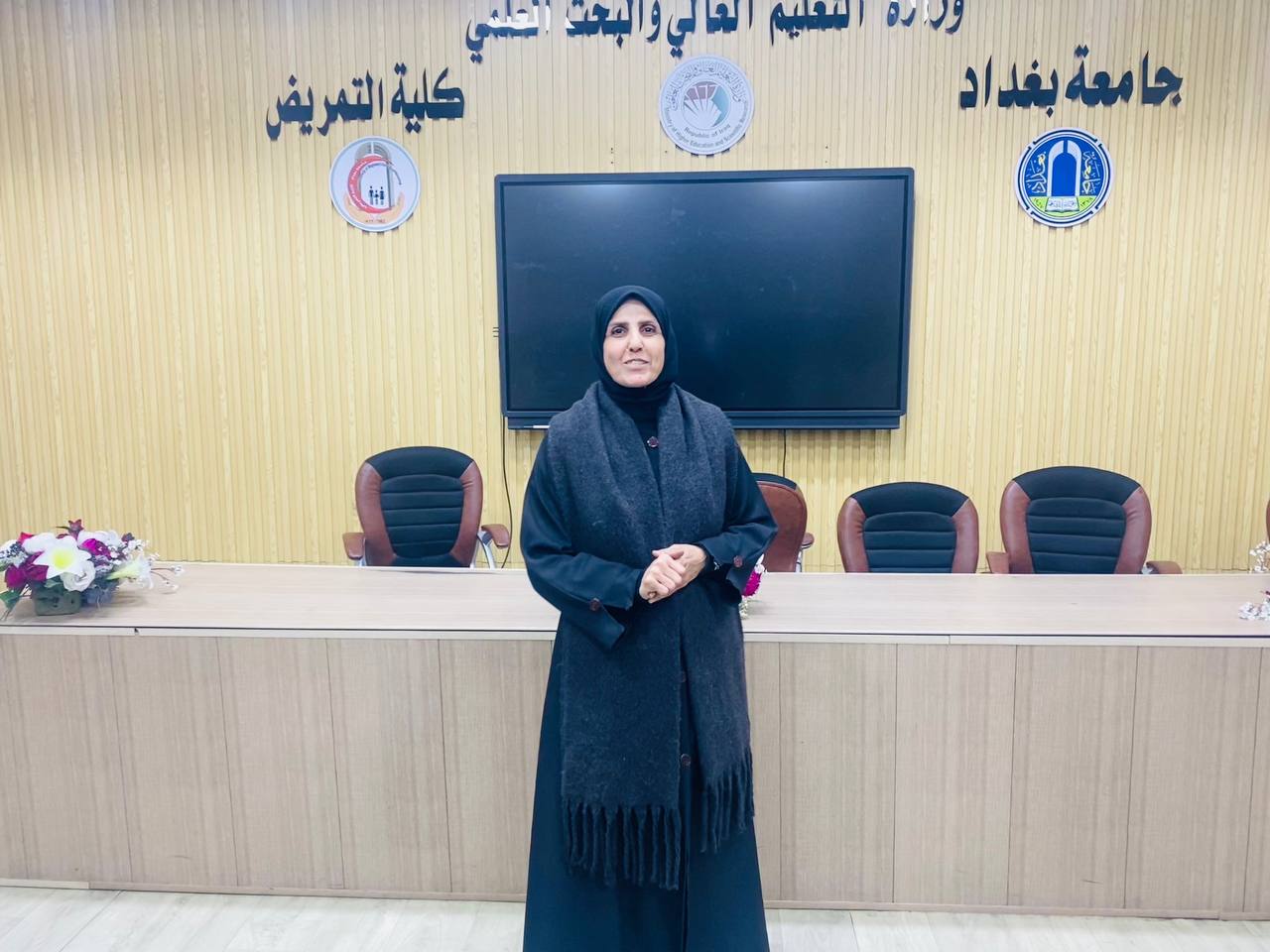
The Psychological Counseling and Educational Guidance Unit at the College of Nursing, University of Baghdad, organized a specialized awareness workshop entitled “Mechanisms for Students to Adapt to Family Pressures and Their Impact on Sustaining Academic Performance.” It was presented by Professor Raja Ibrahim Abdul, Assistant Professor Wafa Abdul Ali, and Lecturer Dr. Khatam Ghazi Attia, with the active participation of master’s and doctoral students in the college’s main hall.
The workshop aimed to establish the concept of psychological stability as a strategic asset and a fundamental driver that ensures the sustainability of human resources and the quality of scientific outputs, emphasizing that the psychological balance of students is the cornerstone of their success in both their daily and academic lives.
The workshop reviewed specific topics, including the value perspective and psychological rationalization, by clarifying the Islamic view on rationalizing mental energy consumption and directing emotions towards construction rather than waste, while balancing family obligations and preserving the right to excellence and success. The workshop also discussed ways to manage stress and address intellectual extravagance resulting from negative thinking and anxiety, and presented practical strategies for eliminating manifestations of psychological stress to ensure the continuity of students’ research and scientific output and guide them on the need to view their mental energy as a blessing that must be preserved through the intelligent management of emotions and time in order to achieve integration between social well-being and cognitive progress in our beloved country
This workshop embodies the college’s firm commitment to the Sustainable Development Goals, foremost among which are Goal 3 on good health and well-being and Goal 4 on quality education. The college’s deanship recognizes that the sustainability of education is not limited to curricula but extends to the mental health of researchers as an essential element in ensuring stable and productive academic outputs and productive academic outcomes. These activities also contribute to achieving Goal 8 by developing a specialized workforce with the psychological resilience and leadership skills necessary to face work challenges and social pressures, thereby contributing to building a balanced knowledge society capable of achieving sustainable well-being and comprehensive growth in all medical and nursing fields, ensuring the preservation and developing it to keep pace with future requirements.


