
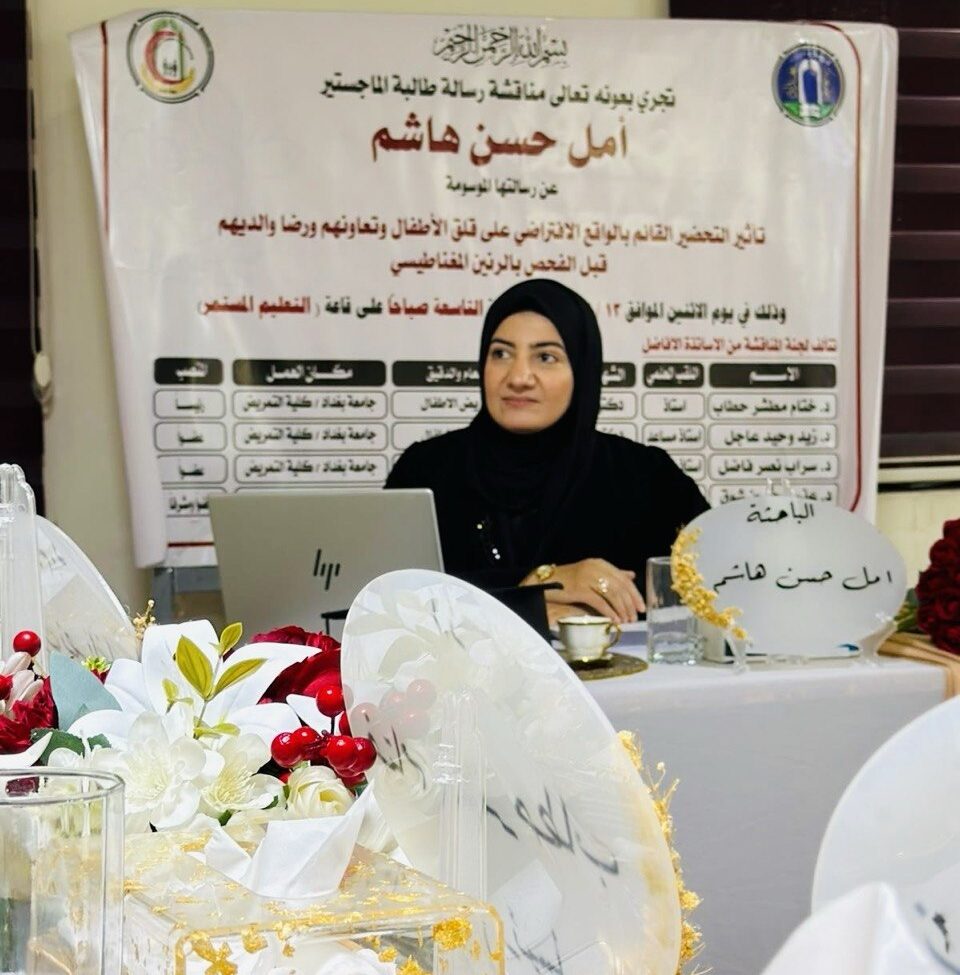
The College of Nursing examined the master’s thesis titled: “Effect of Virtual Reality-Based Preparation on Children’s Anxiety, Cooperation and their Parents’ Satisfaction before Magnetic Resonance Imaging MRI Exam,” submitted by the graduate student Amal Hassan Hashem.
The study aimed to evaluate the effectiveness of virtual reality (VR) as an innovative preparatory nursing intervention in mitigating anxiety and distress among children prior to undergoing Magnetic Resonance Imaging (MRI) scans. It further assessed its direct impact on enhancing procedural cooperation during the scan and measured the overall level of parental satisfaction with this preparatory modality.
The findings demonstrated that VR-based pre-procedural preparation led to a significant and noticeable reduction in pediatric anticipatory anxiety levels and substantially improved children’s cooperation during the examination, thereby facilitating successful scanning procedures. Additionally, the intervention yielded high levels of parental satisfaction and reassurance regarding the clinical experience.
The researcher recommended incorporating and standardizing VR technology as a routine preparatory tool across pediatric radiology and medical imaging units. The study also emphasized organizing dedicated clinical training programs for nursing and healthcare staff to implement interactive digital tools within psychological preparation protocols, alongside providing family-centered education on the clinical and emotional benefits of non-pharmacological technologies in pediatric care.
Following an in-depth scientific defense, the thesis was approved, and the researcher was awarded a Master’s degree with an Excellence rating.
This study aligns directly with the Sustainable Development Goals, notably Goal 3 (Good Health and Well-being) by advancing pediatric mental health and enhancing the safety and quality of clinical diagnostic care, Goal 4 (Quality Education) through enriching evidence-based nursing literature with modern clinical trials, and Goal 9 (Industry, Innovation, and Infrastructure) by utilizing digital health technologies and innovative solutions to modernize the diagnostic environment in healthcare institutions.