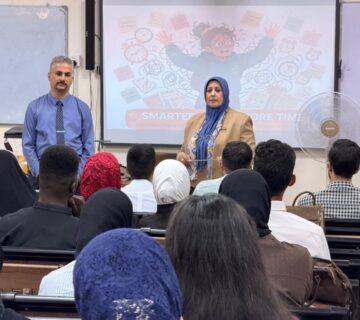
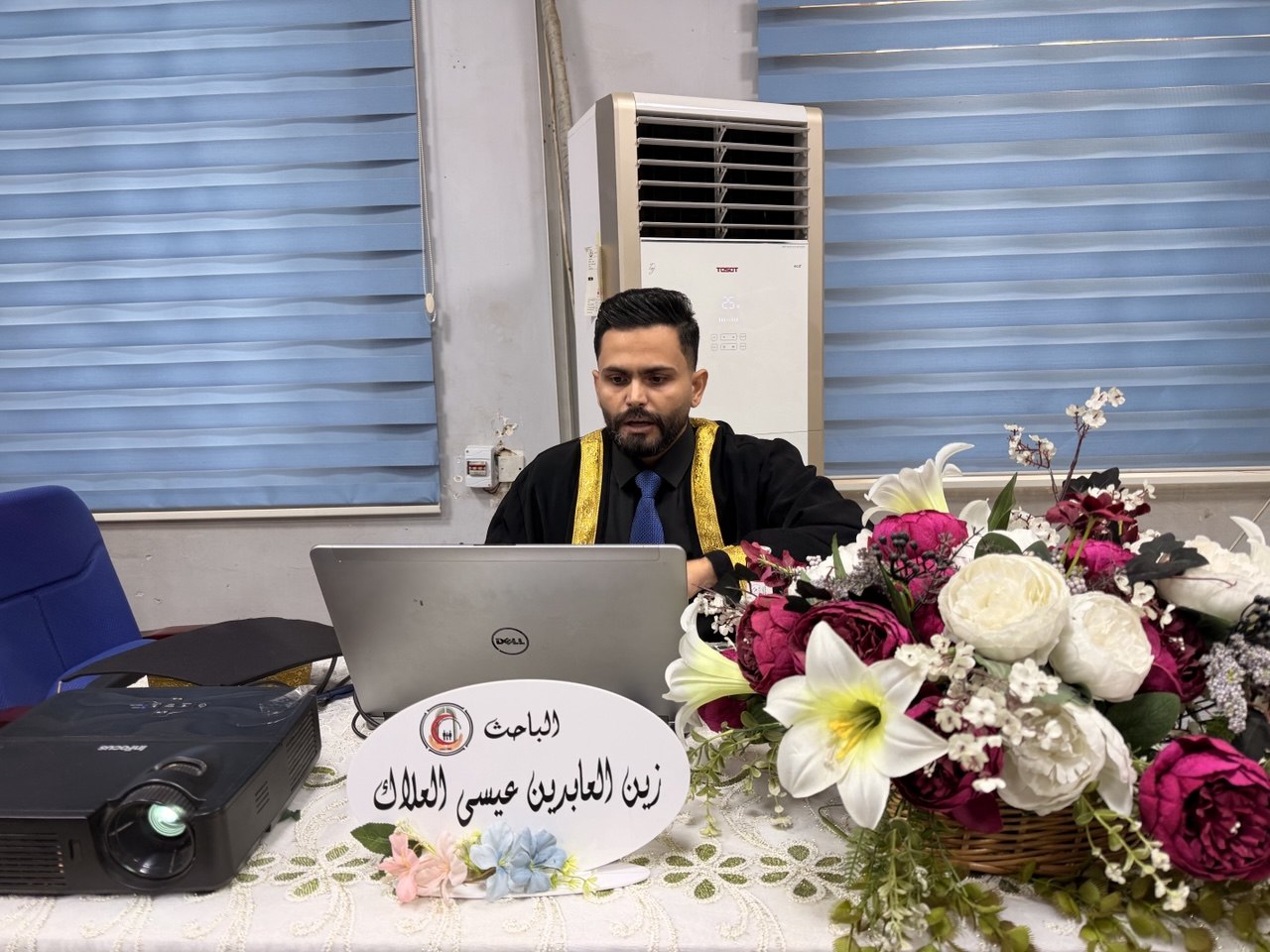
The College of Nursing at the University of Baghdad discussed the master’s thesis titled “The Relationship Between Levels of Empathy and Readiness to Provide Psychological First Aid Among University Nursing Students: A National Study” by researcher Zain al-Abidin Isa Mohsen al-Alak, under the supervision of Prof. Dr. Qahtan Qasim Muhammad, in the Continuing Education Hall
The study primarily aimed to assess levels of empathy and readiness to provide psychological first aid among nursing students at Iraqi universities, to reveal the nature of the relationship between these two variables, to compare levels of empathy and readiness across participating universities, and to examine the impact of a number of demographic variables on these levels, thereby contributing to enhancing students’ competence in providing initial psychological support within nursing practice.
The study concluded that nursing students demonstrated moderate to high levels of empathy and readiness to provide psychological first aid, with a statistically significant positive correlation between the two variables, confirming that empathy is an important factor in enhancing students’ readiness to provide psychological support in emergency situations. The results also showed that university affiliation and perceived income level had a significant effect on empathy levels, whereas neither gender nor age showed a statistically significant effect. The study concluded with key recommendations emphasizing the importance of integrating empathy skills and psychological first aid into the curricula of nursing colleges at Iraqi universities, adopting simulation-based and hands-on training programs, and developing standardized national guidelines to enhance the psychological and professional competencies of nursing students , as well as conducting longitudinal studies to examine the impact of these skills on future academic achievement and clinical performance.
This discussion reflects academic institutions’ commitment to achieving the Sustainable Development Goals, particularly Goal 3 on good health and well-being and Goal 4 on quality education, by preparing and training nursing professionals who possess the scientific and humanitarian competence to provide comprehensive care, including early psychological support and emergency first aid, which directly contributes to improving the quality of health services, enhancing the educational and medical systems’ ability to respond to individuals’ psychological and social needs, and building a sustainable society. Following an extensive scientific discussion, the researcher’s efforts were recognized with a distinction.